




Short on Time
As we all well know by now, the watch-collecting hobby can get hyper-specific. Today, I am wading into the weeds of one of the most highly specialized sub-genres of the Seiko collecting universe, that of Japanese Domestic Market pieces from the brand, which I will be referring to here on out as JDM Seikos. Down below, I’m going to walk you through, first and foremost, what the term JDM Seiko actually means, then get into the most universally coveted models, and similar watches that you can more easily find in the brand’s international repertoire.
JDM Seikos vs. “Japanese-Made”Seikos

Image: Provenance Watches
Given that Seiko is one of Japan’s most significant and historic watchmakers, you might be asking, as you find yourself here in this section, “Seiko is a Japanese brand, so aren’t all Seikos Japanese-Made?” As with most things, the answer is not as straightforward as the question. If we were to base our answer on the framework dictated by the U.S. Trade Commission standards, any watch that has a movement assembled in Japan is good enough to be considered Japanese-made. This casts a pretty wide net. Japan, on the other hand, follows the more rigorous parameters set by the APEC (Asia-Pacific Economic Cooperation Forum). Based on APEC standards, a watch movement and dial components must be assembled in Japan to rightfully claim “Japanese Made” status. Across its catalog, if Seiko can rightly claim the “Japanese Made” label as dictated by the APEC, the brand will typically (but not always) signify that badge of honor by printing “Japanese Made” right on the dial. Additionally, you’ll find that many of the reference numbers of Japanese-made Seikos will end in the letter “J” as a signifier.
"JDM Seikos," on the other hand, really only tells us about watches that were available and sold exclusively for local consumers. Many of these watches were only ever available in Japan. It’s a naming convention, as you might have already picked up on, taken from the car industry. Given this framework, there are instances where you can have a JDM Seiko that is technically not Japanese-Made.
Why Do Collectors Chase After 'Japanese-Made' and JDM Seikos?

Aside from exclusivity, there are several reasons collectors make the case on preferring one, or both, of these two sub-genres in the Seiko world. The first can be traced back to a shift in the Seiko model that occurred sometime in the 1980s, in which the brand began outsourcing some means of its production to Hong Kong. This is not atypical in the watch industry. Even for the prestigious Swiss-made watches, certain components are manufactured outside of Switzerland. Seiko has continued to diversify where different watch parts are made, and in addition to Japan, also produces in Malaysia, Singapore, and Korea. Many collectors have connected this splitting up of production to quality control issues of Seiko products (misaligned bezels and hands, fluctuations in accuracy, etc.) and have noticed that tried-and-true Japanese-made Seikos don’t seem to have these issues as much. There is an acceptance that Japanese-made Seikos are subjected to more rigorous production oversight.
The argument for JDM Seikos is similar. The additional advantage that the brand’s JDM makes offer is one of quality. Domestically, Seiko often offers watches with higher-quality materials like sapphire crystal vs. the typical Hardlex, better bracelets, more premium metals, and better specs. In Japan, Seiko is working within its own market, and is catering to its most knowledgeable and very spec-conscious consumer base, which knows the brand like the back of their hand. Additionally, there aren’t the added taxes, tariffs, and import fees for Seiko to contend with on the home field, so it doesn’t have to trim down its specs to keep the price competitive with these added expenses. In either case, if you have decided that you want to go the real Japanese-made or JDM Seiko route, you will need to prepare yourself to pay more up front than you would for the comparable model in the brand’s international catalog, as you are essentially covering up that difference. Many collectors find this tradeoff worthwhile, but I will leave it to you to decide for yourself.
Seiko Laurel Alpinist/Red Alpinist

I’m going to kick us off with what could be considered one of the most quintessential examples of early JDM Seiko. Introduced in 1959, the Laurel Alpinist was made for use by mountaineers and was only available domestically in Japan. Paying tribute to the brand’s first-ever wristwatch, the Laurel name is rarely ever used across timepieces sold outside of Japan, though there are some exceptions. At its core, the Laurel Alpinist is a versatile, performance-driven watch and is the source of inspiration for one of the brand’s most beloved models, both internationally and at home.
Modern Alternative: Prospex Alpinist SPB121

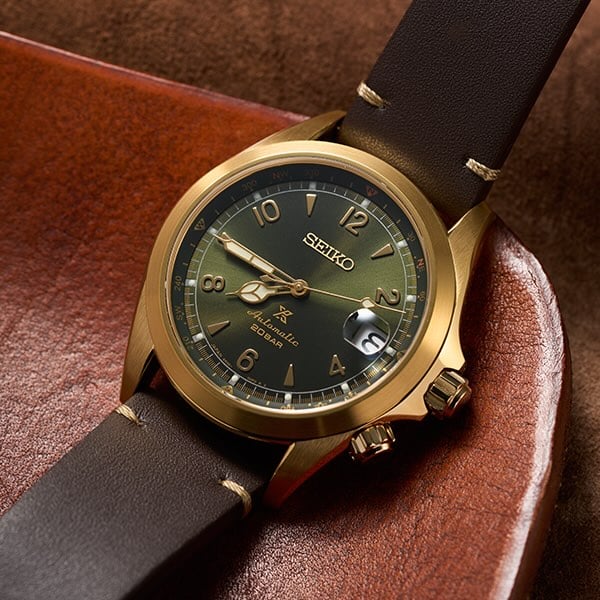
Seiko has, in the past, gone the more explicit heritage reissue route with the original 1959 Laurel Alpinist, with models like the 1959 Alpinist Re-Creation (SJE085), many of which have also been JDMs in themselves. In Seiko’s current international lineup, the closest modern model (that’s currently available for purchase) is the Prospex SPB249, which channels the design language of the first Laurel.
 Image: Provenance Watches
Now onto the aforementioned fan-favorite model, the SPB121 is a direct descendant of the Laurel Alpinist, but with some nuance. At first glance, there are major aesthetic and design differences between the Prospex Alpinist SPB121 and the original Laurel Alpinist, though in all its marketing communications, Seiko ties the former back to the 1959 model. In reality, the signature, quirky details of the Prospex Alpinist we know and love today were established in yet another JDM Seiko evolution of the original Laurel Alpinist: the “Red” Alpinist from the 1990s. With reference SCVF009, we got the funky cathedral handset and interior compass bezel, and this is also the point at which Seiko dropped the “Laurel” moniker, officially swapping it out for the more modern “Prospex” sub-collection.
Seiko SARB033/SARB035

Commonly referred to by the collecting community as the brand’s “Baby Grand Seiko” (which, I can only assume, the brands themselves, are not exactly thrilled about), the SARB033 and SARB035 are essentially two expressions of the same concept, the main difference boiling down to a matter of dial color. What has brought international renown to both of these models is the elevated quality delivered compared to the price point. Originally retailing under the $500 mark, the versatile 38mm case, sapphire crystal, and 6R15 automatic movement overdelivered for the price point. It’s important to note that Seiko discontinued both of these models around 2019, and, in recent years, prices on the secondary market have risen as these value-classics have become more scarce.
Modern Alternative: 5 Sports SRPK89 + Presage Craftsmanship SPB403/SPB405 Enamel Dial

Because there is not a 1:1 modern alternative available on the international market for the SARB033 and similar models, I’m going to present you with two options that capture different aspects of that watch’s appeal. First, the case I’m going to make for the 5 Sports SPRL57 is its everyday-carry appeal and relatively attainable price point. Coming in at just above the $400 mark, the SRRPL57 delivers a similar case size at 37.4mm, but is markedly more in the realm of an everyday sports watch than the JDM SARB033. This is by design, as it’s intended to channel the style codes of the brand’s fan-favorite SNXS series from the Seiko 5 collection of the past.

Another option doesn’t really nail the affordability factor that the SARB035 offers, but it is what I would argue is the closest thing to capturing the “Baby Grand Seiko” feel in terms of style and elevated quality. Positioned within Seiko’s Craftsmanship series, the Presage SPB403/405 leans more classic (its inspiration lies in the brand’s first Laurel models), but delivers many of the elevated specs that has made the SARB035 such a hit. Measuring 40mm, the SPB403 features an enamel dial made by master craftsman Mitsuru Yokosawa (and his team), which is protected by a dual curved sapphire crystal. The five-link bracelet is nicely finished, and this watch utilizes the 6R55 automatic movement, which is on display through the exhibition caseback. The $1,350 price tag is, undeniably, on Seiko’s more expensive end, but I will argue that you’re getting a ton of really elevated details and specs, and we’re still way under the typical price point of an actual Grand Seiko watch. As a brief aside, I did worry that this alternative might be a JDM Seiko itself, but I have confirmed that though the brand doesn’t offer them for immediate purchase, you can get your hands on one at certain authorized Seiko dealers here stateside.
Reference Reference 6119-7163 “Sushi Roll”

Image: The Tokei Club
Among some of the most highly sought-after vintage JDM Seikos are what collectors have nicknamed the “Sushi Roll” divers, typically falling under the serial numbers 6119-7163. Originally launched in the 5 Sports collection in the late ‘60s-’70s, the Sushi Roll divers are defined by their funky, UFO-shaped case, interior rotating bezel, and getting its nickname from its luminous, circular hour markers that resemble Maki sushi. Though the models have long been discontinued, you can still find different examples of these watches for pretty fair prices on the secondary market.
Modern Alternative: Seiko Prospex “King Turtle” SRPE93

Given that Seiko has yet to give its “Sushi Roll” the heritage reissue treatment, aside from some models in the 90s, I have no other option than to go with the most similar alternatives currently offered. The closest match available today in terms of the case shape and diving utility is models that capture the brand’s classic “turtle” case shape, so I’m going with the SRPE93. We’ve still got a funky monobloc case, dive-oriented specs, and classic Seiko design language going on, so I will let the lack of mid-century quirkiness (and the maki-esque hour markers), slide for now.
Seiko Prospex Marine Master 300M (SBDX001/SBDX017)

Debuting in the early 2000s as a reinterpretation of the brand’s classic 300-meter diver circa 1965, the SBDX001 entered the scene as an elevated sports diver and was sold only in Japan. Measuring a whopping 44mm and achieving the extensive depth rating without a helium escape valve, the SBDX001 was replaced by the SBDX017 in 2015, which introduced more scratch resilience with Diashield coating, added more specialized Prospex details (like the “X” on the crown), and improved the LumiBrite used on the dial.
Modern Alternative: Marinemaster SJE101

Though its reception has been somewhat mixed in the collector community, the SJE101 is the direct descendant of the SBDX001. Positioned in Seiko’s “Luxe” tier, this watch has become contentious, as it has sacrificed some of its diving performance in favor of becoming more everyday-carry-friendly. The biggest change is the shrinking of the case size down to a versatile 39.5mm diameter and 12.3mm thick (vs. the 14.6mm profile of the SBDX001), sacrificing depth resistance in exchange for more wearable dimensions. Comparatively, the current Prospex Marinemaster SJE101 only achieves 200 meters of water resistance, rather than the 300 meters that were quintessential to the model that inspired it. That being said, if you value GADA potential, elevated finishing, and slightly more dynamic dial texture over really rugged depth ratings, the SJE101 might be right up your alley.
Seiko SBTM341 Titanium Radio Solar

Image: Watch Charts
Similar to the “Baby Grand Seiko” JDM mentioned above, the SBTM341 is another JDM Seiko that collectors go nuts over from a value standpoint. It’s also another example that doesn’t have an exact equivalent for Seiko heads outside of Japan. Measuring 39.5mm, this watch offers a full titanium case and matching bracelet, sapphire crystal, and solar-powered, automatic timekeeping with the 7B72 movement, and 100 meters of water resistance, all for around $600 (based on current exchange rates).
Essentials SUR373 Titanium

Though this watch doesn’t nail the solar-powered, radio-synced timekeeping of the SBTM341, it does hit other key ingredients that have made the JDM timepiece so well-regarded. Positioned in the brand’s Essentials collection, the SUR373 delivers everyday carry versatility, sports watch style, and a titanium build — all for under $400. This underrated model is among the brand’s international offerings that deliver those elevated specs that people turn to JDM Seiko for, like the use of sapphire crystal over Hardlex and the use of lightweight titanium over steel. To achieve that price, there is some sacrifice in the movement department, as we’re in quartz territory here with the Caliber 6N52, but ultimately, I think this piece underpromises and overdelivers in other areas.
Seiko Presage

Another JDM Seiko that people often compare to the more "Grand" Seiko, the SARX055 has been an obsession among collectors for the similarity to that of the more luxury-positioned brand’s classic “Snowflake” dial. Measuring 41mm, this watch also features the Dauphine-style blue hands, case shape, and dial layout we typically associate with Grand Seiko for about a fifth of the price. The titanium case and bracelet keep things lightweight and comfortable, the dial has an elegant textural finish, and we’ve even got the automatic 6R15 movement on display through the sapphire crystal caseback. That’s a whole lot of watch for $1,000.
Modern Alternative: Seiko Presage SRPF53/ Presage Cocktail Time SRPB77

To my (and many others') chagrin, this is another example of a JDM Seiko that doesn’t have an exact alternative in the Seiko international catalog. Members of the Presage collection strike me as the closest match, with models like the SRPF53 and SRPB77. This is where Seiko focuses its attention on its dial finishing and execution.
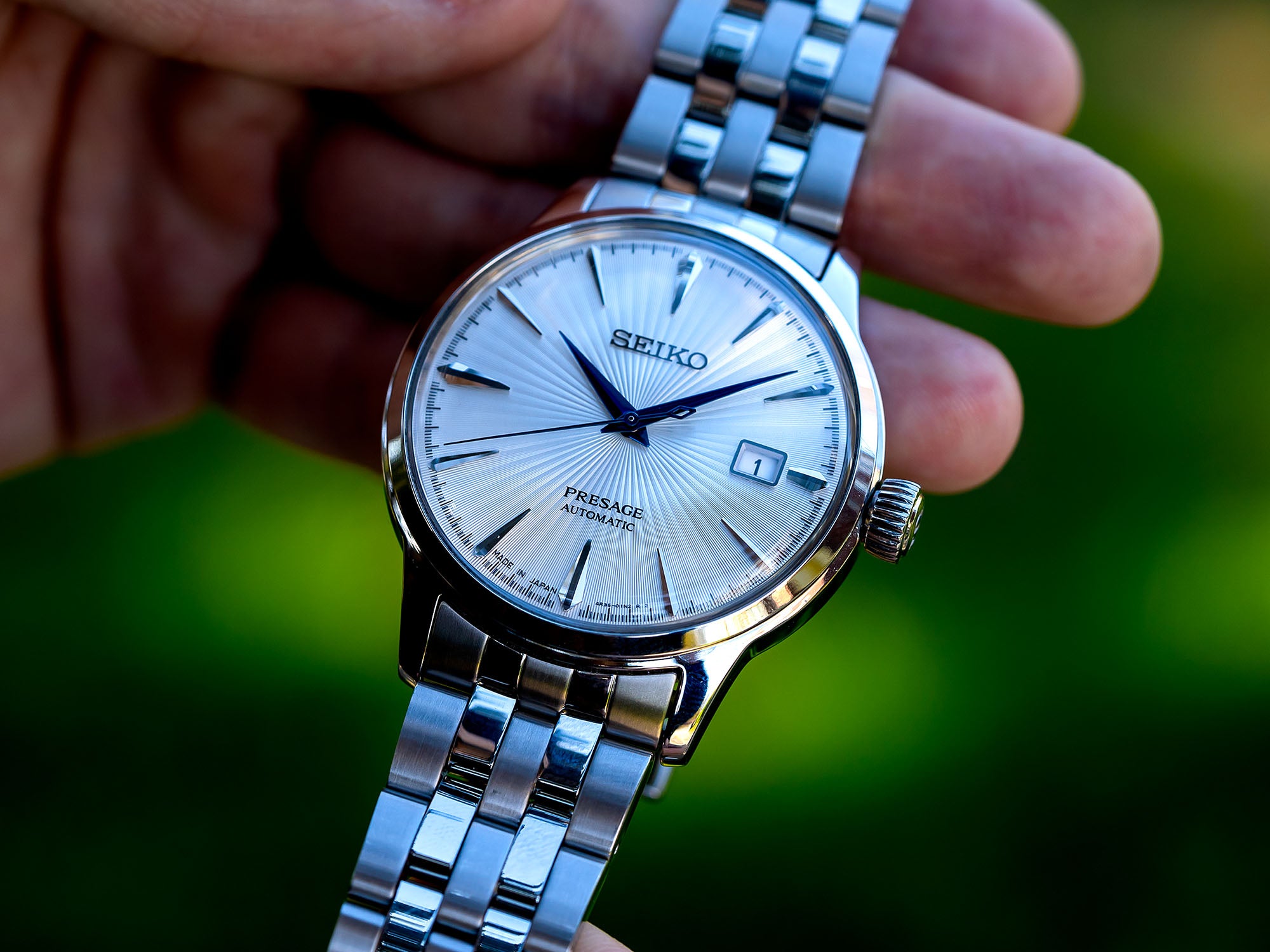
The powdery, snowlike texture of the SRPF53 comes closer to the beloved dial of the SARX055, but I think I actually prefer the handset of the SRPB77 slightly better, and the radial sunburst dial isn’t something to write off either. Both models are powered by the 4R35 automatic caliber, though the former is slightly larger with its 41.7mm diameter vs. the 40.5mm diameter of the SRPB77.
Seiko Brightz SDGZ013 Chronograph

Image: Watch Lords
The Brightz sub-collection is predominantly JDM-exclusive, which has, of course, made it highly sought out by collectors outside of Japan. One model that soared in popularity in the secondary market was also introduced as a JDM limited edition model of only 500 pieces. Made to celebrate the 50th anniversary of Seiko’s first chronograph movement, the SDGZ013, this watch features a panda-style tricompax chronograph layout, is 41.9mm in titanium, and is powered by the 8R48 automatic mechanical chronograph movement with hand-winding and hacking functionality.
Modern Alternative: Prospex Speedtimer Solar Chronograph SSC813

Though there isn’t a titanium-clad alternative to the above JDM limited edition available to international customers, the Prospex Speedtimer SSC813 does deliver on the panda-dial chronograph front. A staple classic in its own right, this watch is also a touch more suited to everyday wear with its 39mm diameter, and features the grab-and-go ease of the Solar Chronograph Caliber V192 movement. Additionally, the SSC813 is water resistant to 100 meters, and its $725 price tag is more attainable than that of the SDGZ013.
Seiko 5 Sports Field SBSC009

Image: Japan Select
The SBSC009 has garnered the reputation of being the JDM Seiko answer to the Explorer II “Polar,” and I think that comparison is quite obvious. Mixing field-watch style with added GMT functionality, the key to the SBSC009’s popularity overseas is its use of a bright white dial, which is still not available on the international market.
Modern Alternative: 5 Sports Field SSK023

This might be the most straightforward alternative to popular JDM Seikos on this list. All the specs are identical to the watch above, but, unfortunately for us, we are going to have to compromise on dial color here stateside. The SSK023 is 39.4mm in steel, powered by the 4R34 automatic caliber, paired with a five-link bracelet, and retails for a cool $450.
Seiko SZSB006 ‘TiCTAC’ Limited Edition

Image: Provenance Watches
I’m going to close this guide out with what might be one of the most fascinating Seiko limited editions ever made – the SZSB006 “TiCTAC” limited edition. Even compared to the above JDM Seiko, the design of the SZSB006 is shockingly similar to the Rolex 1016 Explorer, and also has a touch of the Omega Railmaster about it. A collaboration between Japanese retailer TiCTAC and Seiko, this watch is 40mm in steel, water resistant 10 bar, and channels the style codes of 20th-century field watches dial side. Additionally, this watch is powered by the Seiko 4R35 automatic movement, paired with a three-link bracelet, and originally retailed fo $480.
Prospex Alpinist Black SPB505

Though the exact dial design of the SZSB006 isn’t available in the international Seiko catalog, the newly introduced black dial take on the Prospex Alpinist comes the closest. We’ve got the same, funky, cathedral-style handset and mid-century design touches that scratch the same itch. The Alpinist also has a bit more expanded functionality with the interior compass bezel on the dial. The SPB505 is at a more elevated price point than the SZSB006, though, and currently retails for $995.


Be the first to leave a comment
Log in or to leave a comment