



Dizzy’s Club in Columbus Circle, an extension of Jazz at Lincoln Center, is one of New York City’s premier destinations for live jazz, with world-class acts performing directly in front of a panoramic view of the city skyline. In late July, I had the opportunity to experience one of these performances in person, along with a specially selected audience of watch retailers and industry VIPs, courtesy of Seiko. The evening served as both a showcase for the talents of the Seiko Summer Jazz Camp All Stars — an ensemble made up of the distinguished instructors of the Seiko Summer Jazz Camp, now in its 10th year — and as a spotlight for the recently relaunched King Seiko collection.

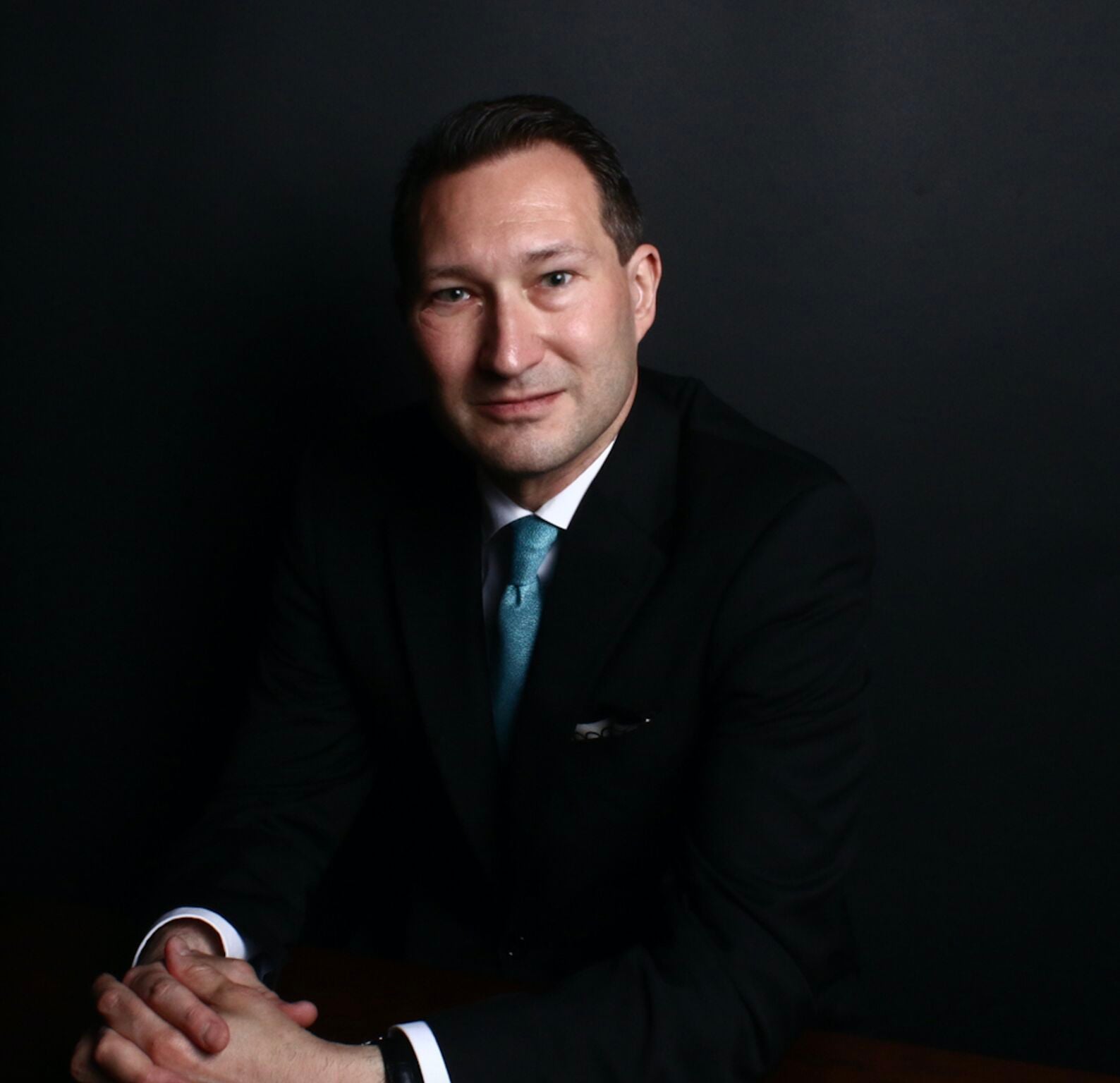
However, I wasn’t just a spectator for the evening’s entertainment; I was also a presenter — albeit not a jazz performer. My friends at Seiko had kindly asked me to join Dave Wieczorek, VP, Seiko Watch of America, in a discussion about King Seiko, its history and evolution, and how this “Newest Classic” within the high-end Seiko Luxe series is still winning over enthusiasts today. For those who weren’t able to attend this gala evening in Gotham, here are some highlights from our discussion.

Seiko Watch of America VP Dave Wieczorek (left) discusses King Seiko's history with TB's Mark Bernardo
• On the Origins of King Seiko: Japan was in the midst of rapid economic growth in the 1950s and early ‘60s, with new expressways connecting cities, household appliances becoming everyday essentials, and heightened expectations for quality and design. It was in this environment that the first King Seiko watch was born, created by Seiko watchmakers at Daini Seikosha in Tokyo's Kameido district, an area known for its strong history of craftsmanship. Introduced in 1961, the original King Seiko had a minimalist, sophisticated design, with sharp, angular hands, solid faceted indexes, and a slim, compact case. It was also a pioneer in the evolution of mechanical watches in Japan, with a manual-winding 25-jewel movement also engineered at Daini Seikosha.
• On King Seiko’s Evolution Through the 1960s: In 1965, the second-generation of King Seiko was introduced. Known as the King Seiko KSK, the model introduced a hacking seconds hand and a bold new design, with larger lugs, a sharper case contour, and the now-familiar 12 o’clock knurled index whose design was (I learned) inspired by luxury cigarette lighters. Also boasting elevated standards for accuracy and precision, the KSK struck, for many at the time, the perfect balance between timekeeping precision and signature style.

King Seiko KS1969 models, inspired by the 1969 originals
Another design change arrived in 1969, with the King Seiko 45KCM, whose elegantly curved silhouette varied from the very linear designs of the previous models. It was also the first King Seiko watch equipped with a high-beat caliber, which vibrated at 36,000 vph for even greater reliability and accuracy.
• On the Birth of the Vanac in the 1970s: Consumers’ tastes were changing in the 1970s, and the watch world had to change along with those trends. It was an era of industry-wide experimentation, with watch brands embracing bold new case shapes, unusual design elements, and vibrant colorways that broke from tradition. Launched in 1972, the first VANAC models spearheaded a new direction for King Seiko and an expansion of its classical design language. The model featured avant-garde elements rarely seen on a Seiko watch, like its angular, blocky, bezel-less case, faceted crystal, and dial colorways with bright, unconventional hues and textural and gradient effects.

King Seiko VANAC in titanium
While the VANAC, which had a mechanical movement, carved out a unique space in the industry by embracing ‘70s trends, it was a relatively short-lived model, impacted — like much of the watch industry - by the rise of quartz technology, which offered exceptional accuracy at drastically lower prices. (The irony that Seiko itself was the leading pioneer of this technology was not lost on us presenters or our audience.)
• On the Return of King Seiko to the Lineup: The modern, very diverse Seiko watch brand of the 21st Century re-introduced the King Seiko to its collection, starting in 2022, dubbing the model “The Newest Classic,” and rolling out three distinctive sub-families. One is a reinterpretation of the 1965 KSK, which has the original models’ sharp, angular case silhouette but with improved finishing and a bracelet designed for greater comfort and wearability. Another is the KS1969, appropriately named for the 1969 iteration that inspired it, with a cushion-shaped case, a multi-row steel bracelet, and an ultra-thin automatic movement. Rounding out the collection is the revived VANAC, which replicates some of the same bold colors and designs of the 1970s, but packing a modern, 35-jewel movement with a three-day power reserve and a very Japan-specific aesthetic approach to the dial: each represents the horizon over the Tokyo skyline at various times of day. Also noteworthy on the new VANACs is a new, smoothly integrated steel bracelet whose combination of finishing makes it just a bit different from the many other such bracelets out there.

Seiko Watch of America President Bob Brennan (left) and Mr. Shuji Takahashi, Director, President, and Group COO, Seiko Group Corporation
Prior to our conversation — which took place amidst a curated collection of King Seiko watches on display, set against the club’s curved bamboo walls, while sunset descended over Manhattan in the large picture window behind the stage — were welcome remarks from Mr. Shuji Takahashi, Director, President and Group COO of Seiko Group Corporation. Bob Brennan, Seiko Watch of America President, introduced Mr. Takahashi and welcomed the guests to kick off the evening's agenda. Immediately following the historical discussion was the evening’s real main event, an exclusive jazz performance in the comfy, club-like atmosphere by the aforementioned Seiko Summer Jazz Camp All Stars. Led by Juilliard-trained, Grammy-winning trombonist Michael Dease, the ensemble showcased an array of musical styles, from the Latin influence of saxophonist Diego Rivera, to the prolific jazz guitar of Jocelyn Gould, to the piano of Wynton Marsalis collaborator Dan Nimmer to the Afropop and gospel-influenced vocals of St. Louis-raised Alicia Olatuja.

The Seiko Summer Jazz Camp All Stars Ensemble
Still sporting the titanium-cased King Seiko VANAC on my wrist that I’d worn for the presentation, sipping an Old Fashioned cocktail (a special request graciously indulged by my hosts), I settled in for the performance — an ideal way to conclude a high-spirited evening that, hopefully, left the gathered crowd as enthusiastic as I was about the relaunch of King Seiko, and as curious about what we’ll see from the brand next.




Be the first to leave a comment
Log in or to leave a comment